Japan, South Korea and the United States are preparing to hold Freedom Edge 26 from Sept. 7 to 11 in international waters east and south of Jeju, according to South Korea’s Joint Chiefs of Staff as reported by SBS News. The U.S. Forces Japan announcement confirms the exercise and describes it as a trilateral, multi-domain event with expanded interoperability.
The exercise arrives at a sensitive moment. North Korea has just reshuffled senior military leadership, naming Kim Song-gi defense minister and returning Pak Jong-chon to a key Central Military Commission post. The exercise is described as defensive and designed to respond to nuclear and missile threats, but any large coordinated military activity near the Korean Peninsula also carries a signaling and escalation burden.
What is confirmed
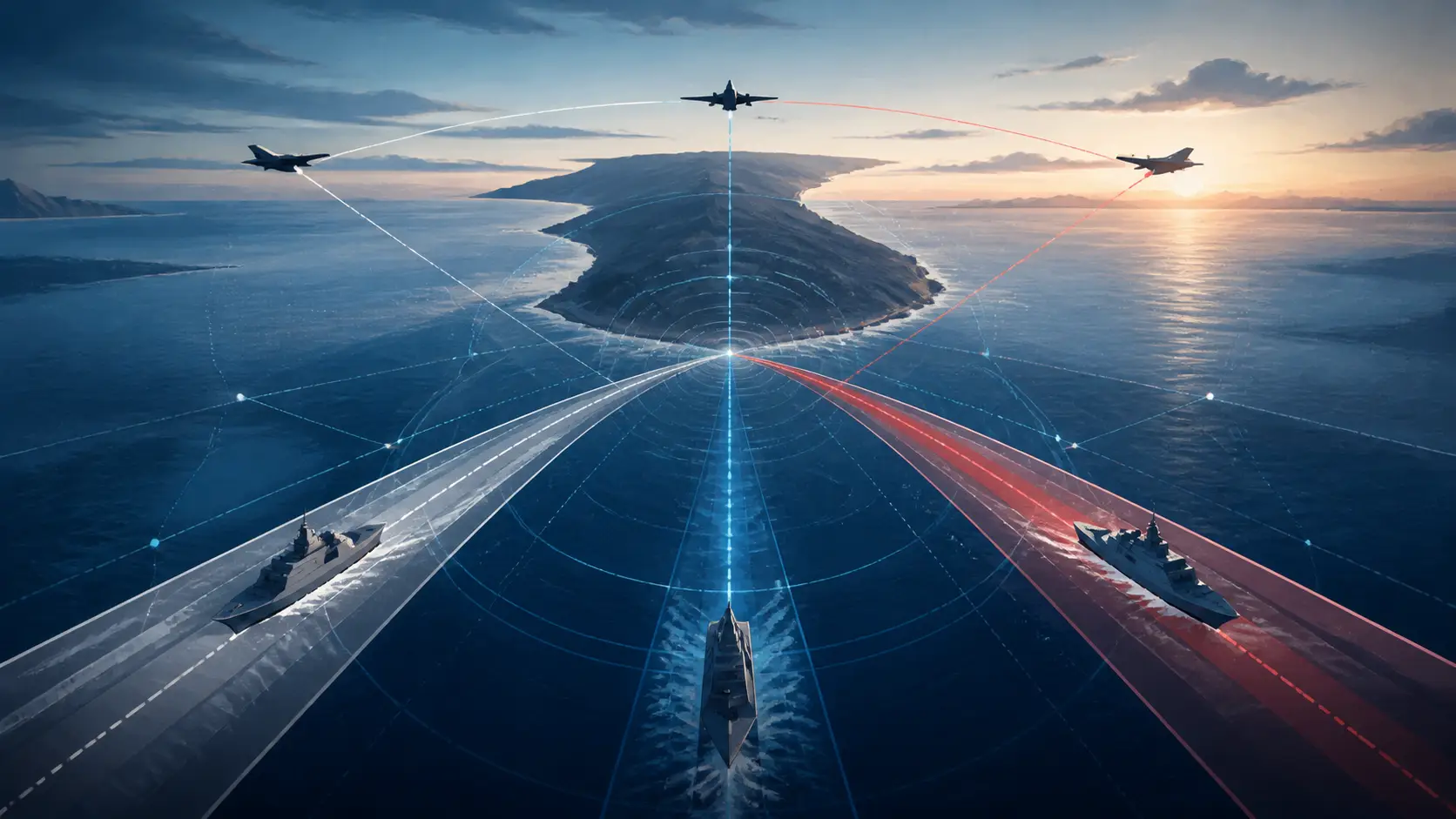
The U.S. Forces Japan statement says Freedom Edge 26 will include multinational maritime and aviation capabilities, enhanced air-defense scenarios, medical-evacuation training and maritime-interdiction operations. It also says the exercise will feature enhanced real-time data sharing and synchronized coordination among the three countries.
South Korean reporting gives the dates as Sept. 7–11 and places the exercise in international waters east and south of Jeju. It says earlier iterations included maritime missile defense, air and air-defense exercises, anti-submarine warfare and cyber-defense training. The public announcements do not provide a complete order of battle or confirm whether a U.S. aircraft carrier will participate.
That last point is worth keeping open. A carrier’s presence can change the visual and operational scale of an exercise, but its absence would not make the exercise insignificant. Interoperability increasingly depends on sensors, communications, data links, command procedures and the ability to coordinate across domains—not only on the largest platform in the formation.
Why data sharing is the real test
The phrase “real-time data sharing” points to the exercise’s most consequential practical task. A maritime or air-defense picture is only useful if partners can exchange information quickly, interpret it consistently and decide who is responsible for what. That requires compatible systems, agreed rules and repeated practice under pressure.
The Asian Imported archive’s shipping coverage offers an unexpected parallel. Complex maritime operations depend on reliable sensors, communications and handoffs. In a security setting the stakes are higher, but the organizational problem is familiar: a network is only as strong as its least compatible connection.
Medical evacuation and maritime interdiction also broaden the exercise beyond missile defense. They test whether the partners can manage a crisis with both military and humanitarian dimensions, including identification, boarding procedures, casualty care and coordination with civilian authorities. Those skills matter in peacetime incidents as well as conflict scenarios.
The China question should be handled carefully
South Korean reporting notes that some analysts see a U.S. interest in using trilateral cooperation to check China, while the South Korean military emphasizes North Korean nuclear and missile threats. Both interpretations may coexist, but neither should be presented as the official purpose unless the participants say so.
The safest reading is that Freedom Edge strengthens a three-country security relationship in a region where North Korean weapons, Chinese military activity, maritime disputes and supply-chain dependence overlap. That does not make every exercise an anti-China operation. It does mean Beijing will watch how the partners coordinate and how they describe the geography and mission.
Deterrence and escalation
Exercises are intended to reduce risk by making deterrence credible and by rehearsing responses before a crisis. They can also increase risk if messages are ambiguous or if one side interprets defensive training as preparation for offensive action. The diplomatic work around Freedom Edge therefore matters as much as the training schedule: clear notification, disciplined language and channels for avoiding accidents all help.
North Korea’s likely response is uncertain. It may condemn the exercise, conduct a demonstration or say little publicly. Analysts should separate a statement from a launch, a routine movement from an unusual deployment and a political warning from a change in doctrine. The exercise itself is confirmed; future reactions are not.
What to watch next
The exercise will also test political stamina. Japan and South Korea have built security cooperation through periods of historical disagreement and domestic political change. Repeating a complex exercise is easier than sustaining the consultations, information rules and public explanation that make cooperation credible. If the partners can preserve those habits after the ships return, Freedom Edge will have produced a capability that lasts beyond five days at sea. Watch for official details about participating platforms, training areas and safety notices; the degree of live data integration; and post-exercise statements describing what was learned. Also watch whether Japan and South Korea frame the event in the same terms. Consistent language would suggest institutionalization; visible divergence would show that political coordination still trails military coordination.
Freedom Edge 26 will be measured by its ability to make three separate forces act like a reliable network while keeping the network legible to neighbors. That is a narrower and more useful question than whether the exercise looks large. In a crowded region, coordination is valuable—but so is control over the signal it sends.
That balance will matter beyond the Korean Peninsula. Commercial shipping, aviation and humanitarian operations all depend on predictable maritime conditions. The more clearly the partners communicate safety and purpose, the easier it is for civilian operators and neighboring governments to distinguish routine training from an unfolding crisis.
Sources
U.S. Forces Japan: Freedom Edge 26 announcement · SBS News: Sept. 7–11 dates and context · Yonhap: North Korean military reshuffle · U.S. Indo-Pacific Command statement via U.S. Forces Japan