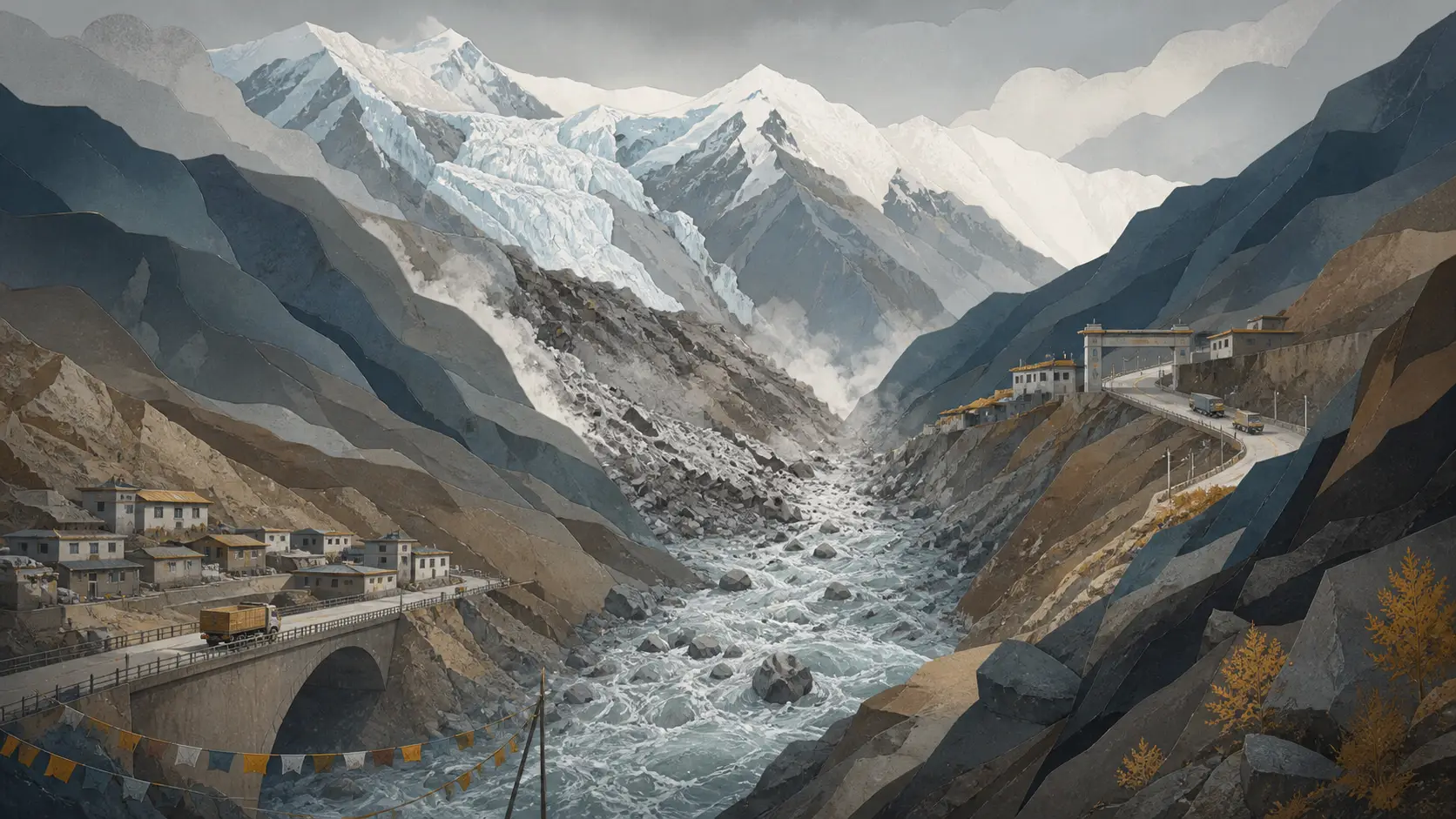
China’s response to the Aug. 26 mudslide at Gyirong Port is a logistics story as much as a political one. The border facility connects China and Nepal, but the disaster began in a mountain system shared by both countries and disrupted the roads, communications and power needed to reach people on either side.
Official Chinese reporting describes a fast escalation: geological-disaster and disaster-relief responses were activated, central supplies and funds were allocated, emergency power teams moved toward the site, and Chinese search-and-rescue personnel were dispatched. The sequence illustrates a basic truth of disaster response: rescue cannot scale until electricity, lighting, communications and access are restored enough for people and equipment to work.
The first problem was access
China’s State Council information office said roads leading to the port were cut off along with communications and power supplies. That combination is particularly difficult at a high-altitude border crossing. A damaged road slows rescuers; no power limits lighting, charging and medical support; broken communications make it harder to know which routes are safe or which buildings have been searched.
The response therefore had to build a temporary operating environment. The government said 30,000 central relief items—including tents, stoves, clothing, quilts, folding beds and moisture-proof mats—were allocated. It also reported 120 million yuan in central natural-disaster relief funds and 100 million yuan in central budget investment for emergency recovery and reconstruction in Xizang.
Those figures describe allocations, not completed recovery. They should not be read as proof that every affected community has received aid or that the port can resume normal trade. The Asian Imported guide to container importing explains how dependent supply chains are on predictable handoffs. A mountain port can be technically open while remaining commercially unusable if roads, inspection facilities or power are not reliable.
Power is a rescue capability
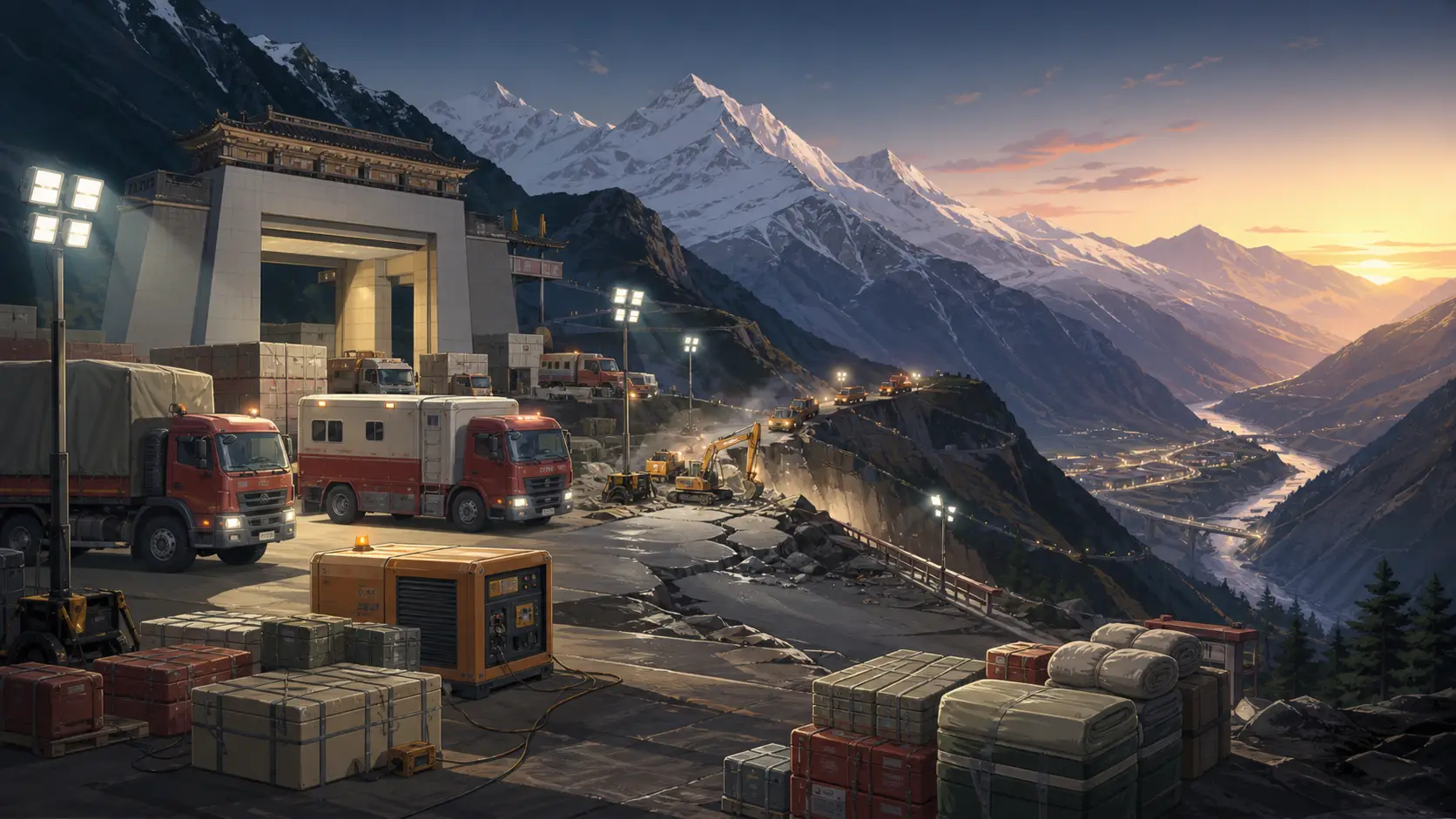
China’s State Grid Xizang Electric Power Company said 85 emergency repair personnel, seven power-generating vehicles, two generators and 19 sets of lighting equipment had reached Gyirong early on Aug. 27. It reported that another 30 personnel, five power-generating vehicles, 42 generators and 18 lighting sets were transported from nearby areas.
The details may sound mundane beside the scale of a mudslide, but they are exactly what makes a response work. Lighting lets teams search after dark. Generators support communications and medical equipment. Repair crews can assess substations and lines while the search operation continues. Redundancy matters because one machine or one route can fail in an unstable landscape.
The Ministry of Emergency Management and the National Fire and Rescue Administration also dispatched 111 firefighters and rescue personnel from the China Search and Rescue team, according to the government account. Their arrival by chartered plane shows how airlift and ground logistics have to be synchronized: aircraft can move specialists quickly, but supplies and heavy equipment still depend on usable roads or carefully planned staging points.
Diplomacy follows the supply chain
On Aug. 30, Chinese Foreign Minister Wang Yi spoke by phone with Nepal’s foreign minister. China described the disaster as its most serious cross-border disaster with Nepal in recent years, while Nepal expressed thanks for emergency humanitarian assistance and said it would work with China on rescue, reconstruction, disaster prevention and climate response.
That diplomatic channel is operational, not ornamental. Missing people may include nationals of several countries. Border closures affect families, tourists, workers, customs officials and freight operators. A working channel helps governments compare lists, coordinate access and decide how relief can move when normal procedures are disrupted.
It also creates a test for transparency. Authorities on both sides will need to publish clear updates about casualty figures, missing people, road conditions and reopening decisions. In a disaster, information is a public-safety asset. Conflicting counts or vague route information can send families and commercial operators toward danger.
What reconstruction should measure
The next phase should be judged by more than how quickly a port reopens. A resilient rebuild would include slope and river assessments, backup communications, protected power systems, emergency storage and evacuation plans for workers and nearby communities. It would also clarify how upstream warnings reach downstream authorities in Nepal.
The archive’s coverage of shipping emissions and infrastructure is a useful comparison: trade infrastructure is often evaluated by throughput and efficiency, while disasters expose the value of redundancy. A route with a second bridge, a backup generator and a tested warning protocol may look less efficient on paper but can be far more valuable when the main system fails.
A response can also fail through a mismatch between national and local priorities. Border agencies may want to reopen trade quickly, while residents need safe housing, schools and access to farms or clinics. Reconstruction should publish criteria for reopening and involve affected municipalities in decisions about temporary routes. Doing so would reduce the risk that a corridor is declared functional for commerce while remaining unsafe for the people who live beside it.
What to watch next
Watch for verified updates on the missing at Gyirong, the condition of the port and connecting roads, the restoration of power and communications, and any formal Nepal–China agreement on reconstruction or early warning. The key question is whether emergency logistics become a durable cross-border resilience program—or remain a response assembled after the next failure.
Sources
China government: emergency response at the Xizang border port · China government: power and rescue mobilization · China government: Wang–Nepal foreign minister call · WHO situation assessment