Asian Imported
News
When the 20th meeting of the Chinese Communist Party started last October, Xi Jinping, the most powerful leader in China since Mao Zedong, said again that he would lead the world’s biggest polluter away from carbon. Xi talked about the importance of protecting the environment by saying, “Clear waters and lush mountains are our silver and gold.” He also talked about the need for people and nature to live together in harmony as an important part of China’s plans for growth. These comments were made at Beijing’s quinquennial meeting, where Xi won his third term as leader of the country of 1.4 billion people.
At the time, the rating agency S&P said that Xi’s comments showed how important new energy sources, like hydrogen, are to China’s economy. This was after Xi had promised in 2020 that China would hit its highest level of carbon emissions by 2030 and become carbon neutral by 2060.
Experts think that the question is not whether hydrogen will play a role in China, but when it will. The country’s energy policy is now set at the top level.
Green hydrogen, which comes from natural sources and is thought to be a clean fuel, could help Xi achieve two important goals related to climate change.
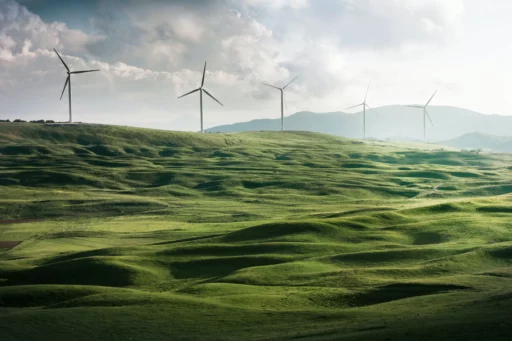
First, hydrogen can be used to store energy, which is a key part of getting rid of coal-fired power plants from China’s electricity system and giving solar and wind power a stable backup source. Li Shuo, a senior global policy assistant at Greenpeace in Beijing, says that many people see hydrogen as a way to make the electricity system more flexible and use the full potential of wind and solar power.
Second, hydrogen can be used instead of coal as a clean fuel in China’s steel industry, which makes the most steel in the world. In an article for the scientific journal Nature Communications, researchers from the University of Oxford pointed out that steel is still the most widely used metal in the world and that fossil fuels are responsible for 7 percent of the CO2 emissions from the energy sector. Even though coal can be replaced by other fuels like methane to lower the carbon footprint of steel production, green hydrogen could be used to remove carbon from the process completely.
Li Shuo talks about how important hydrogen is for decarbonizing steelmaking and how hard it is to find the right technologies or methods to do this. “Incorporating hydrogen, especially from green sources, into the process of making steel could cut emissions by a lot,” he says.
Nikhil Bhandari, who is in charge of Asia-Pacific natural resources and clean technology studies for Goldman Sachs, thinks that hydrogen could help China reduce carbon emissions by up to 20% in the long run. Bhandari thinks that by the end of the decade, pure economics will push hydrogen to a point where it is financially viable.
The bank’s latest report backs up this point of view. It says that China’s combined solar and wind power capacity will reach 3.3 terawatts by 2030, almost three times the government’s goals. About 30 percent of the world’s installed solar power is already in China. As the price of solar panels and batteries keeps going down, the improved economics of renewable energy and saved power will make green hydrogen a better choice than coal.
Bhandari and his team think that China will get close to being energy independent by 2060. They think that in the next few decades, green hydrogen will replace not only coal in power plants, but also natural gas in factories and diesel and gasoline in cars.
In 2015, the Chinese government put hydrogen at the center of its “Made in China 2025” plan to improve the industrial industry. China, on the other hand, has mostly used fossil sources to make hydrogen. Analysts at Fitch Solutions think that the use of hydrogen made from green sources will grow faster after 2030. However, the speed of expansion will also depend on how fast new technologies improve and where they are available.
For short-term market competitiveness, the Oxford researchers have stressed the importance of putting green hydrogen steelmaking facilities in places with lots of reliable solar and wind power and high-quality iron ore.
As a result, China is investing in hydrogen infrastructure and technologies in many places, including the northern industrial rustbelt in Shandong, Hebei, and Beijing, as well as the high-tech export zones in Shanghai and Guangdong, which are further south. In these hydrogen groups, some companies make fossil fuels, make electricity, make cars, and do other industrial work.
Big steel companies like China Baowu Steel and HBIS are testing out new ways to make “green steel” that don’t use coal to heat the furnaces. Instead, “green hydrogen” is used to heat the electric furnaces.
Li does say, though, that important political issues will also affect when hydrogen will be widely used. Will Chinese steelmakers, who may already see their long-term growth slowing, commit to making more expensive “green steel”? Also, will policymakers in Beijing be tougher on the carbon footprint of high-emitting businesses that still drive the Chinese economy and employ a lot of people?
Li warns against seeing hydrogen as a single infrastructure answer. He says that large-scale hydrogen projects will have infrastructure and deployment costs. Many unanswered questions remain about how interested politicians are in these kinds of projects.
Post navigation
Archives
Categories
Asian Imported
News
Proudly powered by WordPress | Theme: Newsup by Themeansar .